The Renaissance of the Nepalese Field: A Data-Driven Evolution

To provide Agri Agenda with a truly professional and persuasive edge, we must combine analytical data with the emotional weight of real-world success. This approach transforms a simple blog into a resource that educates the mind while stirring the heart.
The following feature explores the shift in Nepalese agriculture, anchored by a powerful real-world case study and a timeless perspective on our connection to the land.
As we look at the agricultural landscape of 2026, the conversation is shifting from “how to survive” to “how to thrive.” For the modern farmer, the path forward is illuminated by a simple truth: the most successful agri-entrepreneurs are no longer just tilling the land; they are managing a business.
From Tradition to Transformation
The transition from subsistence to commercial farming is more than just a change in seeds; it is a change in mindset. While our traditional methods have preserved our culture, the modern commercial model is what will preserve our future.
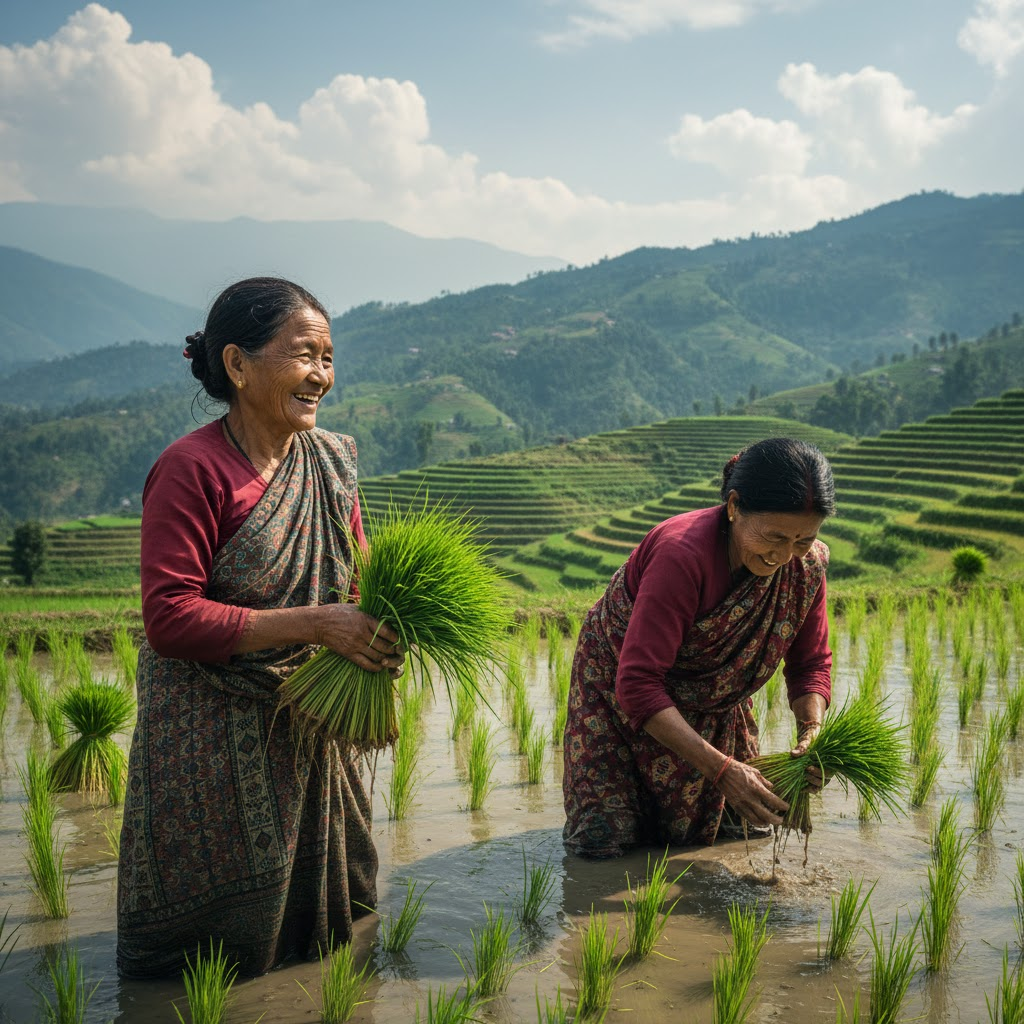
In the traditional subsistence model, the primary goal is family consumption. Farmers rely on saved seeds—which often have lower yields and higher risk—and utilize human or animal power for 80% of their operations. Irrigation is largely rain-fed, making the entire season a gamble against the clouds. Market access is limited to local middlemen, often resulting in the lowest possible prices for the producer.
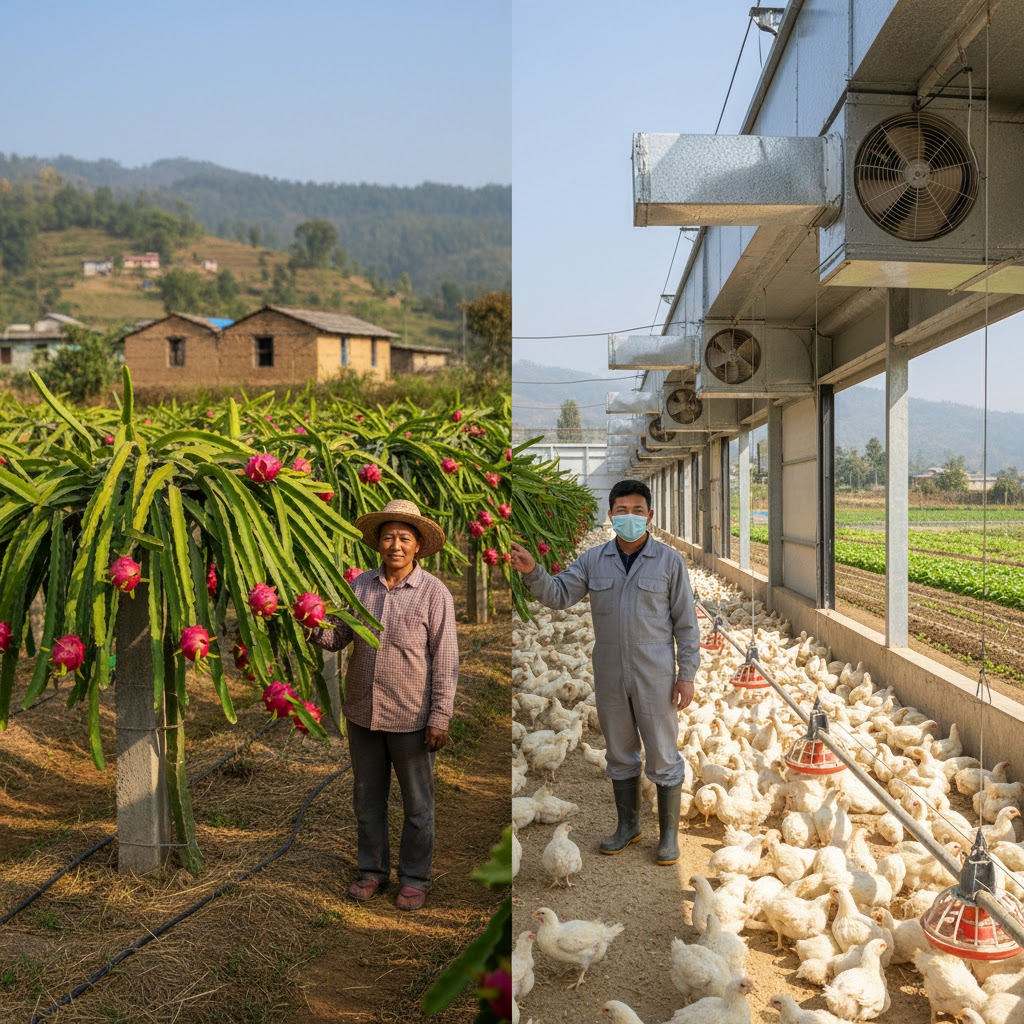
In contrast, the modern commercial model is market-driven. By using certified seeds, farmers are seeing yields 15% to 20% higher than their predecessors. Mechanization through power tillers and drones, combined with solar-pumped drip irrigation, allows for year-round production. Most importantly, direct-to-consumer digital portals ensure fair pricing, leading to an estimated return on investment (ROI) of 40% to 120% depending on the crop.
Case Study: The Return of the Duo in Arghakhanchi
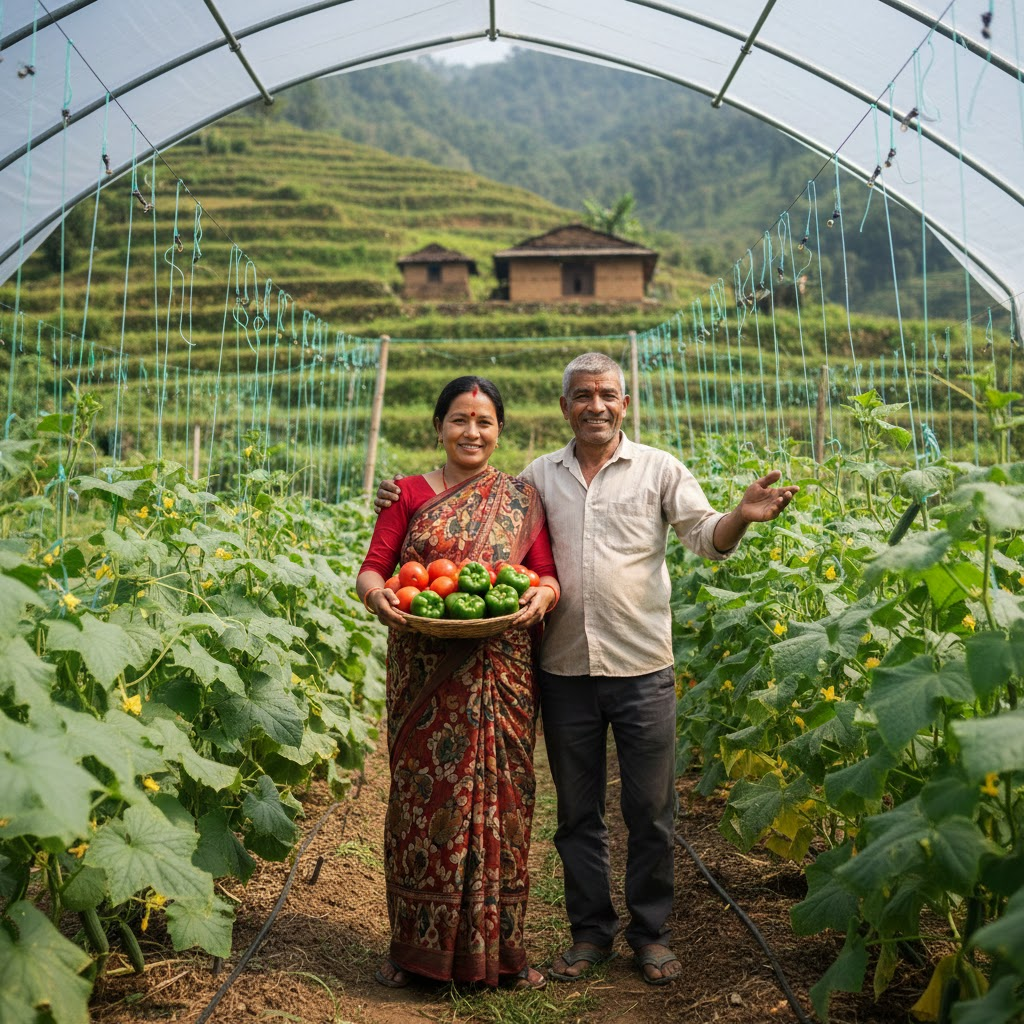
The story of Sabitra and Shiva from Arghakhanchi serves as a beacon for the modern Nepalese farmer. For four years, Shiva worked in India to send money home while Sabitra managed their household and a small plot of land. Their life changed when Sabitra joined a local women’s agricultural cooperative and received training in tunnel farming and bio-pesticide preparation.
She transformed their nine ropanies (1.13 acres) into a commercial vegetable hub. Seeing the potential, Shiva returned home. Together, they took a low-interest loan of Rs. 60,000 to supplement their savings. In just five months, they generated a profit of Rs. 260,000 by selling tomatoes, onions, cucumbers, and capsicum.
Today, they are not just “farmers”; they are successful business partners who have invested their profits into the education of their daughter. Their journey proves that when technical knowledge meets family unity, the need for foreign employment disappears. As Shiva notes, they are earning significantly more in their own village than they ever could abroad.
A Voice from the Earth
This transformation is not just about tractors and spreadsheets; it is about our relationship with the ground beneath our feet. As the great agricultural scientist M.S. Swaminathan famously said:
“If agriculture goes wrong, nothing else will have a chance to go right.”
This quote resonates deeply in the Nepalese context. Our soil is the foundation of our civilization. When we respect the land by adopting sustainable, modern practices, we aren’t just growing crops—we are cultivating hope, security, and a legacy for the generations to come.